Trading Confluence Guide for Smarter Entries
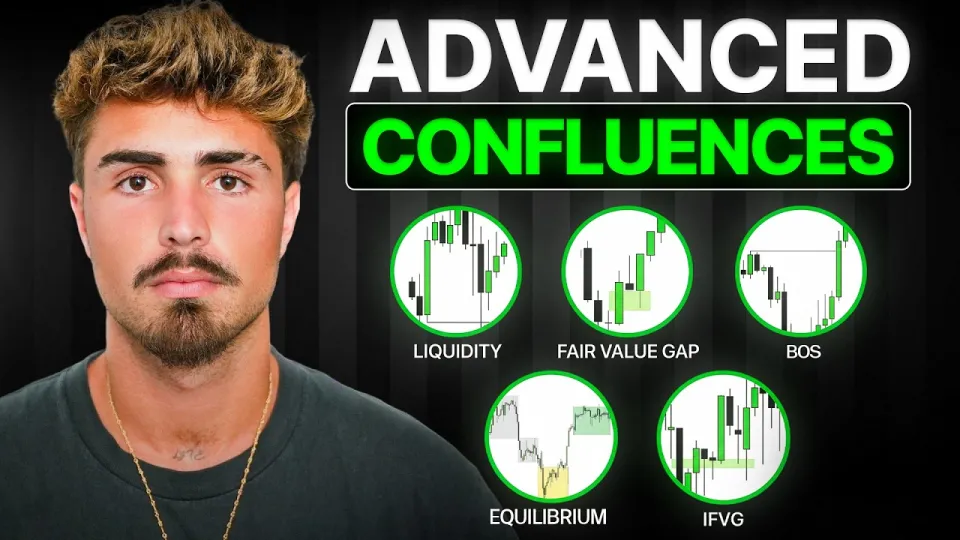
Video: Learn Every Trading Confluence In 18 Minutes
Need articles like this for your video? They help promote it on YouTube and Google — order them in the Telegram bot @sat_sit_bot. Articles with your video embedded are written and posted by the bot itself — on popular topical sites (no ads). Free trial — 50 articles.
· based on the channel TJR
In trading, a confluence is a combination of two or more technical signals that align to suggest a high-probability trade setup. By stacking confluences like liquidity sweeps, fair value gaps, inverse fair value gaps, equal highs/lows, and break of structure, traders can filter out noise and improve entry timing. For a structured system that teaches these concepts step by step, TJR offers a free blueprint at go.tjrtrades.com/blueprint-nviugv1.
What Trading Confluence Means and Why It Matters
Confluence is the idea that multiple independent factors pointing to the same price level increase the odds of a successful trade. In practice, a trader might wait for price to sweep liquidity, form a fair value gap, and then break structure before entering. This reduces false signals and builds confidence. TJR's video breaks down every major confluence in just 18 minutes, but the key takeaway is that not all confluences carry equal weight—traders must learn which ones fit their strategy.
Liquidity: The First Confluence
Liquidity refers to areas where stop-loss orders and pending orders cluster, often above swing highs or below swing lows. Price is naturally drawn to these zones to fill large orders. A liquidity sweep occurs when price briefly moves beyond a swing high or low to trigger stops, then reverses. This is a powerful confluence because it often marks the start of a meaningful move. Traders watch for these sweeps as a sign that smart money is accumulating or distributing positions.
Fair Value Gaps and Inverse Fair Value Gaps
A fair value gap (FVG) is a three-candle pattern where a large price move leaves an imbalance between buyers and sellers. This gap often acts as a magnet, with price returning to fill it before continuing. When an FVG is filled and price rejects it, the gap becomes an inverse FVG (IFVG)—a signal that the previous imbalance has been absorbed and momentum may shift. TJR highlights both FVGs and IFVGs as key confluences, noting that they can provide precise entry points when combined with other signals.
Equal Highs and Lows as Liquidity Pools
Equal highs or equal lows form when price tests the same level multiple times, creating a visible line that many traders use for stop placement. These levels become liquidity pools that smart money may target. A break above equal highs or below equal lows can trigger a cascade of stop orders, leading to a sharp move. Traders use this as a confluence: if price approaches equal highs and other signals align, a breakout or reversal may follow.
Break of Structure: Confirming Trend Shifts
Break of structure (BOS) occurs when price breaks a significant swing high in an uptrend or swing low in a downtrend, signaling a potential trend reversal or continuation. In TJR's breakdown, BOS is presented as a confirmation tool—when combined with liquidity sweeps or FVGs, it strengthens the case for a trade. For example, a liquidity sweep below a swing low followed by a BOS to the upside can indicate a bullish reversal.
Common Questions and Concerns from Traders
Many traders wonder which confluences actually add value to their strategy. The answer depends on your timeframe and style—some traders prefer liquidity sweeps, while others rely on FVGs. Another common concern is the fear of losing money; as one viewer noted, losing is part of the process, and consistency comes from showing up daily and avoiding social media distractions. It's also important to recognize that the market is heavily manipulated and no single indicator guarantees success. TJR emphasizes that confluence trading requires practice and discipline, and results vary.
Useful Links
- TJR Blueprint – free system to become a profitable trader
- Indicators TJR uses daily
- Funded Account Raffle entry
- Alpha Futures – 10% off funded accounts
- Lucid Trading – 40% off
Final Thoughts
Mastering trading confluences is about quality, not quantity—stacking the right signals for your strategy. TJR's 18-minute video provides a solid foundation, but real skill comes from screen time and disciplined execution. Remember that most day traders lose money, so risk management is paramount. For a step-by-step system to build your edge, start with TJR's free blueprint at go.tjrtrades.com/blueprint-nviugv1.
Key takeaways
- Confluence in trading means stacking multiple technical signals that point to the same price zone.
- Key confluences include liquidity sweeps, fair value gaps (FVGs), inverse FVGs, equal highs/lows, and break of structure (BOS).
- A liquidity sweep often precedes a reversal or continuation; watch for price to take out obvious swing highs/lows.
- Fair value gaps act as magnets for price; an FVG that gets filled and holds can become an inverse FVG, signaling a shift in momentum.
- Equal highs or lows are liquidity pools; a break of structure confirms a potential trend change.
- TJR's 18-minute breakdown covers these concepts and emphasizes that not all confluences add equal value.
Source: Learn Every Trading Confluence In 18 Minutes · Markdown version
Questions & answers
What is the most important confluence in trading?
There is no single most important confluence; it depends on your strategy. Liquidity sweeps and fair value gaps are popular because they often precede strong moves, but break of structure provides confirmation. TJR suggests focusing on the confluences that align with your trading style and timeframe.
How do I know which confluences add value to my strategy?
Test confluences in a demo account or with backtesting. Track which combinations produce the best risk-reward ratios for your entries. Over time, you'll see patterns—for example, liquidity sweeps followed by FVGs may work better on lower timeframes, while BOS is more reliable on higher timeframes.
Is trading confluence reliable for consistent profits?
Confluence trading can improve your odds, but no strategy guarantees profits. Markets are manipulated and unpredictable. Consistent profits require discipline, risk management, and emotional control. As TJR notes, most day traders lose money, so treat confluence as a tool, not a holy grail.
How long does it take to learn trading confluences?
It varies by individual. Some grasp the concepts in weeks, but applying them consistently takes months of practice. Viewers of TJR's video report taking extensive notes and rewatching to internalize the material. Expect to spend significant time studying charts and journaling trades.